
Dredging
Guest Blog by Mike Potter of Slowing the Flow, Pickering - August 2026
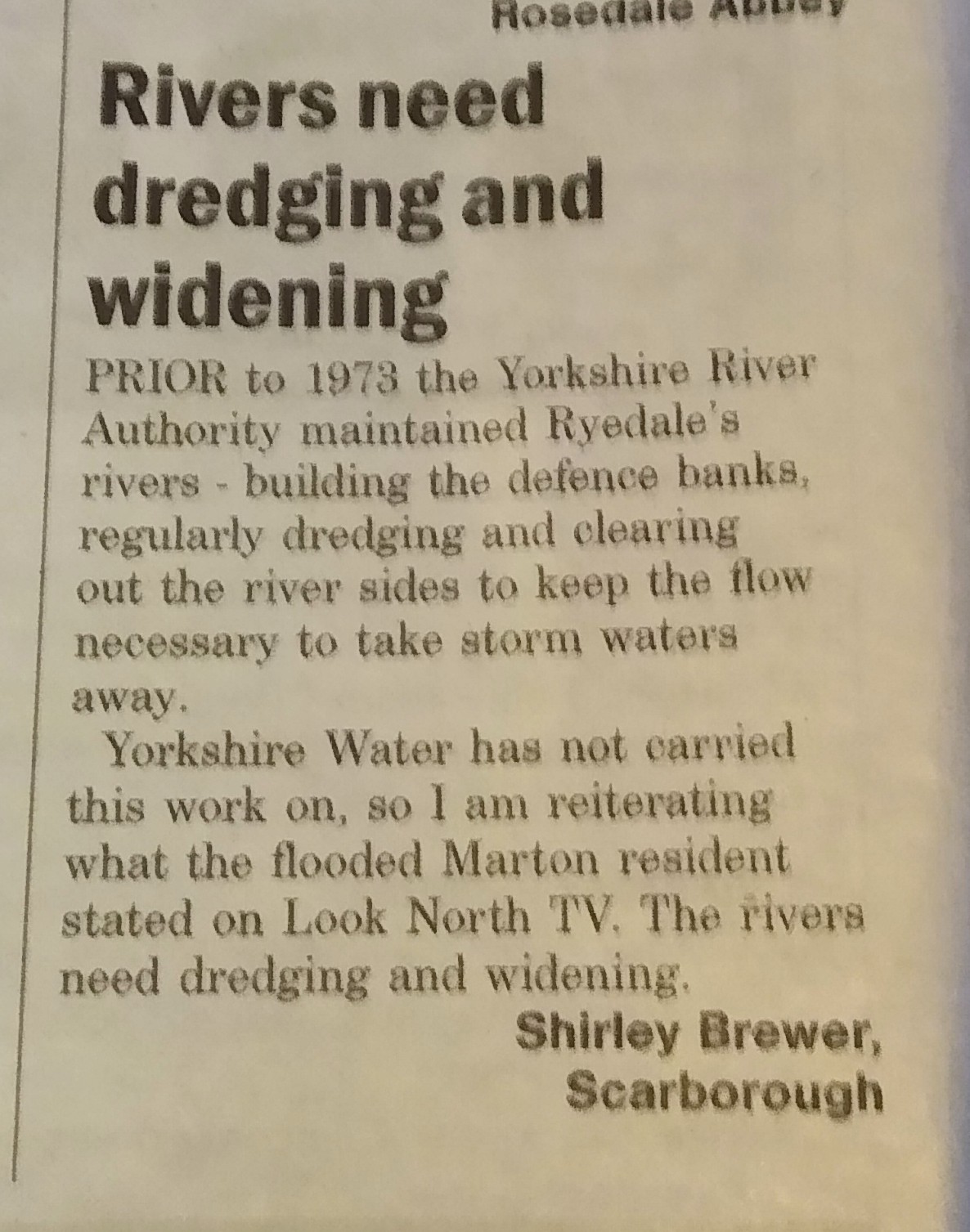
A recent letter in a local newspaper advocating widespread dredging is typical of comments I hear and read constantly.
An excellent quote I saw about dredging rivers: 'This is one of those complex problems for which there is an answer that is clear, simple and wrong'. Advocates of dredging say that it’s for rivers to hold more water, but unfortunately, they don’t hold water, they move it. Much better for aquifers, floodplains, upper catchments, attenuation ponds and wetlands to hold water.
I find that people have very fixed views and rarely believe my explanations, so now I often just ask questions. Most have simple yes/no answers, but will hopefully make you think, analyse and understand for yourself:
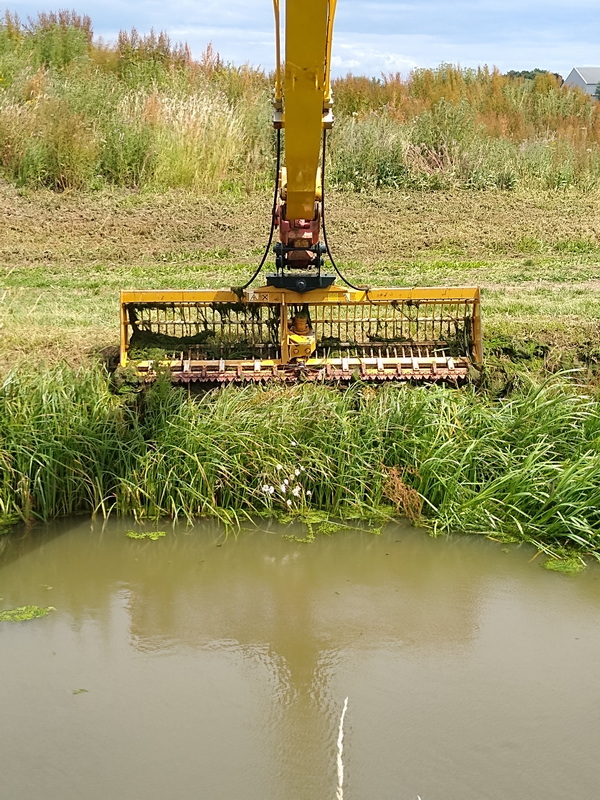
Where does the stuff come from that some advocate dredging out, why did it get there and will it just return again? Have you heard dredging advocates mention sediment supply? What’s the cost of widespread dredging, what happens to the stuff dredged out (often contaminated, but that’s another issue) and who pays? How easy are all riverbanks to access? Is it better to apply the right measures in the right places?
More specifically to the letter, is Yorkshire Water responsible for rivers (other than raw sewage in them)? What effect would widening a river have on riverbank stability and hence sediment supply? What would happen to the many riverbank trees and why are they there? Who would pay to buy the extra property for widening (and loss of much agricultural land). What would happen to the many bridges and riverside buildings? What effect would deepening a riverbed have on adjacent bridge parapets or property foundations? How do you deepen a river that already goes down to bedrock? Does disconnecting the river from its floodplain through building, floodbanks and floodwalls reduce the capacity of the river, given that the floodplain is part of the river?
Not wholly opposed to dredging...
Just to prove I'm not wholly opposed to dredging (or de-silting as the EA would prefer to call it).... In built-up urban areas, invariably with multiple bridges and constrictions of the watercourse, it’s important not to lose capacity and conveyance in the channel, meaning water levels will rise from a higher base and therefore flood more quickly. Two specific examples spring to mind:
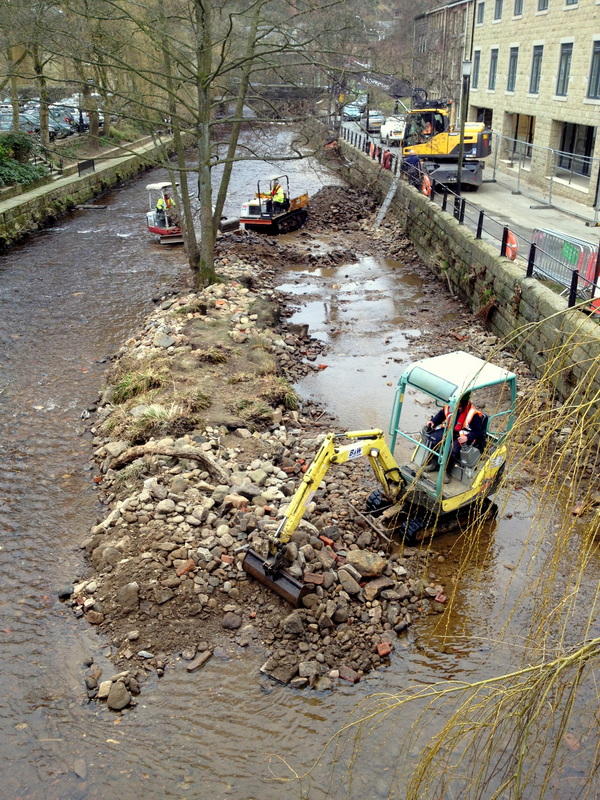
1. In early 2016, I watched from Hebden Bridge town hall as several diggers in the river channel removed a huge quantity of stone and gravel that had washed downstream in yet another devastating flood in the Calder Valley, leaving the capacity of the channel significantly reduced.
2. Ropery Bridge in the centre of Pickering was rebuilt circa 1970’s. The former railway bridge became a road, with the same very low deck, but solid side walls rather than the former lattice. I’m sure it wouldn’t be allowed now, as it creates a clear flood risk, as the bridge soon surcharges as flows increase. To make matters worse, natural morphology and sediment deposition of the beck flow created a quite solid bank, reducing the cross-sectional area by circa 20%. Along with other sediment, sandbanks and resultant luxuriant vegetation in a few hundred metres of town centre Pickering Beck, a truly eye-watering quote for removal by a private contractor was given to the EA, who wisely declined. However, the Vale of Pickering IDB did the job effectively under a Public Service Cooperation Agreement (PSCA) at a fraction of the cost. However, a few high flow events have replaced much of that sediment in less than a year, while also moving other sediment on downstream in a natural cycle. Such sediment transfer therefore becomes a constant and costly exercise to maintain, particularly in highly modified or managed systems which tend to defy nature’s wishes. Limited public finances will always make this a controversial issue, as anyone familiar with the largely unnatural Somerset Levels drainage system will appreciate, and even more so in urban areas prone to flooding.
In my early, less educated days of interest in flooding issues, I recall pointing out to Prof Stuart Lane (a leading hydrologist and flood expert) that if you don’t clear your gutters, they overflow instead of moving rainwater away. I received a knowing smile, a raised eyebrow, and a comment about it being rather more complex than that. Indeed – clean gutters can quickly and effectively move water (Speeding the Flow), but what subsequently happens to that water after it goes down the drainpipe is just as important – often in combined sewers. And gutters still overflow if the rain is torrential enough.
No amount of flood defences or river maintenance can resist the power of nature if storms are intense enough, so the pinnacle of the pyramid that is Flood Risk Management (FRM) has to be climate change mitigation!
Your questions
I’ll happily answer any of your questions that may arise, but only after you’ve answered my questions, as I’d love more people to understand the basics. I only get mildly irritated (and sometimes in extremes, sarcastic) when people get offensive. I’d much rather that they realise this is far more complex subject than first meets the eye. I also know that watercourse management and maintenance becomes even more complex when ecosystem and biodiversity issues are included, but that’s a whole other can of worms.
Mike Potter, Slowing the Flow Pickering and WWSTF.